New Client First Exam Only $28!


Surgery can be stressful for both cats and their owners. Whether your cat has undergone a routine spay or neuter procedure or a more complex operation, proper post-surgical care is essential for a smooth and comfortable recovery.
Cats are resilient animals, but they still need attentive care during the healing process. By creating a calm environment, monitoring their health, and following veterinary instructions carefully, you can help your cat recover safely and return to their normal routine.
Follow Your Veterinarian’s Instructions Carefully
The most important step in your cat’s recovery is following your veterinarian’s post-surgery instructions exactly as provided. These guidelines typically include medication schedules, feeding recommendations, activity restrictions, and incision care.
Administer medications as directed and never skip doses unless advised by your veterinarian. If you have questions about your cat’s recovery or medication instructions, contacting your veterinary clinic promptly can help prevent complications.
Create a Quiet and Comfortable Recovery Space
After surgery, your cat needs a peaceful environment to rest and heal. Choose a quiet room in your home away from loud noises, children, and other pets.
Make sure the recovery area includes:
- A soft and comfortable bed
- Easy access to food and water
- A nearby litter box
- Minimal distractions or movement
Providing a calm and warm environment helps reduce stress and supports faster healing.
Monitor Your Cat’s Behavior and Pain Levels
Cats often hide signs of pain, so it’s important to watch for subtle changes in behavior during recovery. Some common signs that your cat may be experiencing discomfort include:
- Reduced appetite
- Lethargy or reluctance to move
- Excessive grooming around the surgical area
- Increased hiding or irritability
- Vocalizing or unusual restlessness
If you notice any concerning symptoms, contact your veterinarian for guidance. Adjustments to pain management may be necessary to keep your pet comfortable.
Prevent Licking or Biting at the Surgical Site
Protecting the incision site is one of the most important aspects of post-surgery care. Cats may try to lick or chew the area, which can introduce bacteria and delay healing.
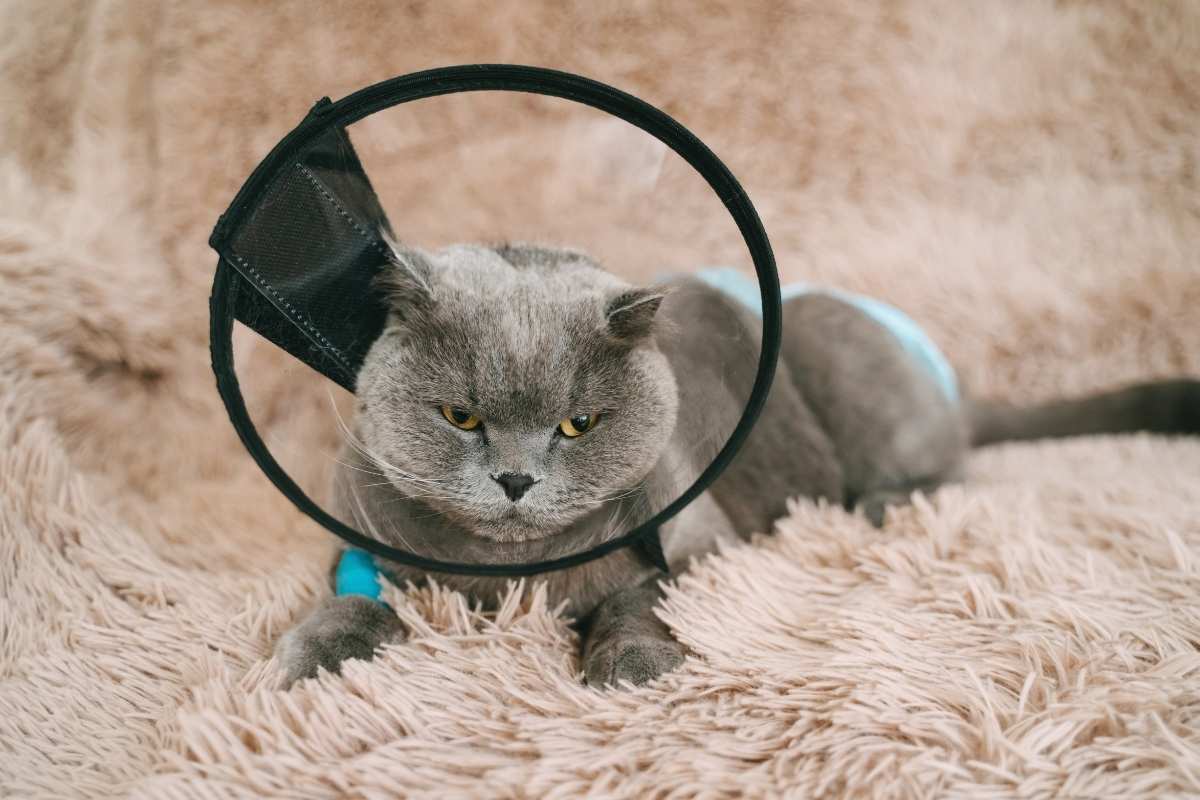
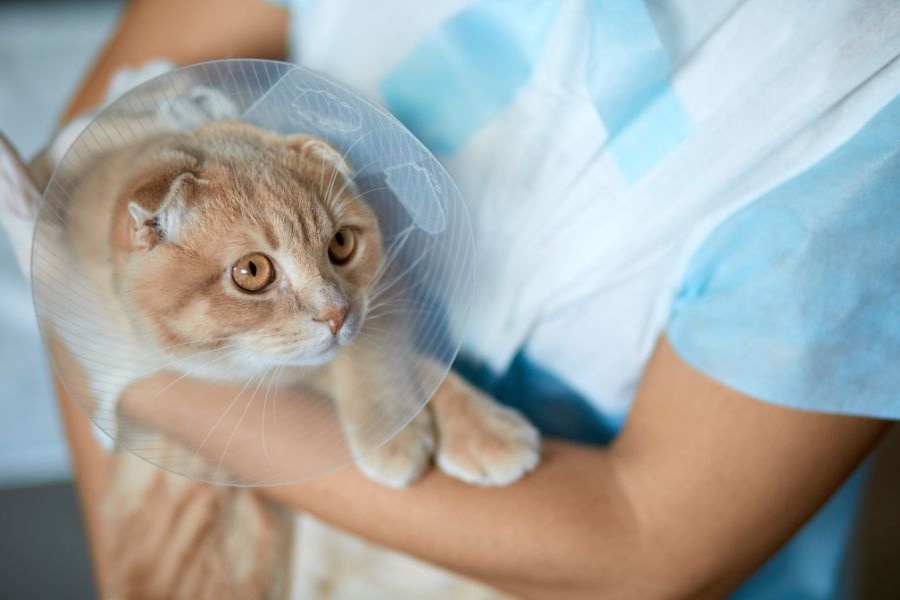
An Elizabethan collar (often called a cone) is commonly recommended to prevent your cat from reaching the incision. While it may take some time for your cat to adjust to wearing it, the collar helps prevent infections and protects the surgical wound.
Ensure the collar fits properly so your cat can eat, drink, and move comfortably.
Limit Physical Activity
Cats are naturally agile and may attempt to jump or run even during recovery. However, too much activity can strain the surgical incision and slow the healing process.
To prevent complications:
- Keep your cat in a confined area or small room
- Avoid letting them jump onto furniture
- Prevent rough play with other pets
- Follow your veterinarian’s recommended activity restrictions
Most cats need about 10–14 days of limited activity after surgery, depending on the procedure performed.
Watch for Signs of Infection or Complications
Monitoring the surgical site daily helps ensure the wound is healing properly. Contact your veterinarian if you notice any of the following symptoms:
- Redness or swelling around the incision
- Pus or unusual discharge
- A foul odor from the wound
- Fever or lethargy
- Increased sensitivity around the surgical area
Early detection and treatment can prevent more serious complications.
Maintain Proper Nutrition During Recovery
Nutrition plays an important role in helping your cat heal after surgery. Some cats may have a reduced appetite for the first day or two after the procedure.
You can encourage eating by offering:
- Moist or wet cat food
- Small, frequent meals
- Fresh water at all times
If your cat refuses food for more than 24 hours, contact your veterinarian for advice. In some cases, a special recovery diet may be recommended to support healing.
Gradually Return to Normal Routine
As your cat begins to feel better, you can slowly reintroduce normal activities. Always follow your veterinarian’s guidance regarding when to resume playtime, grooming, and exercise.
Avoid rushing the process. A gradual return to regular routines helps prevent injuries and ensures your cat heals completely.
The veterinary team at Parkwood Animal Hospital & Boarding can provide guidance and support to help pet owners manage post-surgical care and ensure their pets recover safely.
Supporting a Smooth Recovery for Your Cat
Helping your cat recover from surgery requires patience, attention, and proper care. By providing a quiet environment, limiting activity, protecting the incision site, and monitoring your cat’s behavior, you can greatly improve their healing process.
If you have any concerns during recovery, reaching out to your veterinarian promptly can help ensure your cat remains comfortable and healthy throughout the healing period.
Frequently Asked Questions (FAQs)
1. How long does it take for a cat to recover from surgery?
Most cats recover within 10–14 days, although more complex procedures may require a longer healing period.
2. Can I give my cat human pain medication?
No. Human medications can be toxic to cats. Only use medications prescribed by your veterinarian.
3. How can I stop my cat from licking the surgical incision?
Using an Elizabethan collar or protective recovery collar is the most effective way to prevent licking or biting.
4. What should I do if my cat refuses to eat after surgery?
Try offering wet food or small portions. If your cat does not eat for more than 24 hours, contact your veterinarian.
5. When can my cat return to normal activities?
Most cats can gradually resume normal activities after about 10–14 days, depending on the surgery and veterinary guidance.
6. What are signs that the surgical site may be infected?
Signs include swelling, redness, discharge, foul odor, fever, or increased pain around the incision.